A series of disruptive outages in 2025 served as a critical, real-world audit of global digital infrastructure. Beyond headline-making downtime, these incidents—spanning physical facility failures to hyperscale cloud region disruptions—revealed systemic vulnerabilities that are magnified by the scale and interdependency of modern workloads. They underscore a pivotal shift: resilience is no longer just about building fortresses to prevent failure, but about engineering systems and processes that ensure predictable, rapid recovery when failure inevitably occurs. This analysis explores the concrete lessons learned and the operational imperative for a new era of infrastructure design.
Five Critical Vulnerabilities Exposed
- 1. Physical Infrastructure: The Re-Emergent Bottleneck
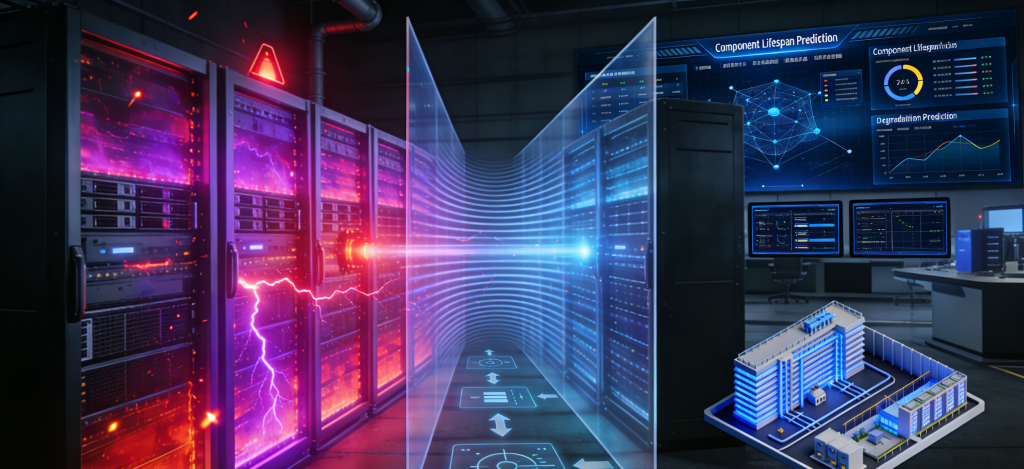
The transition to high-density computing for AI and advanced analytics has dramatically altered the risk profile of physical plants. Facility designs that were robust for 5-10kW racks are now operating at their thermal and electrical limits with clusters exceeding 50kW. The 2025 incidents confirmed that cooling system faults, power distribution anomalies, and fire events remain primary causes of catastrophic downtime, but their impact is now instantaneous and far more widespread.
The response must evolve from redundancy to sovereign-grade resilience:
- Integrated Systems Testing: Moving beyond component checks (e.g., generator run) to full-scale, “black-site” drills that simulate concurrent failures in utility power, chilled water systems, and control logic.
- Predictive Facility Management: Implementing sensor networks and analytics not just for alerts, but to model thermal performance and predict equipment degradation in real-time.
- Defense-in-Depth Segmentation: Architecting power and cooling with physical and logical isolation to contain failures and prevent a single event from cascading across an entire data hall.
- 2. The Fragility of the Control Plane
Modern infrastructure is managed by a complex, software-defined control plane that orchestrates resources. The critical lesson from cloud region outages is that when this orchestration layer fails, even fully operational hardware can become inaccessible. The industry witnessed how a disruption in a primary region’s management APIs could impair services globally, and how automated failover systems could sometimes propagate, rather than contain, a failure.
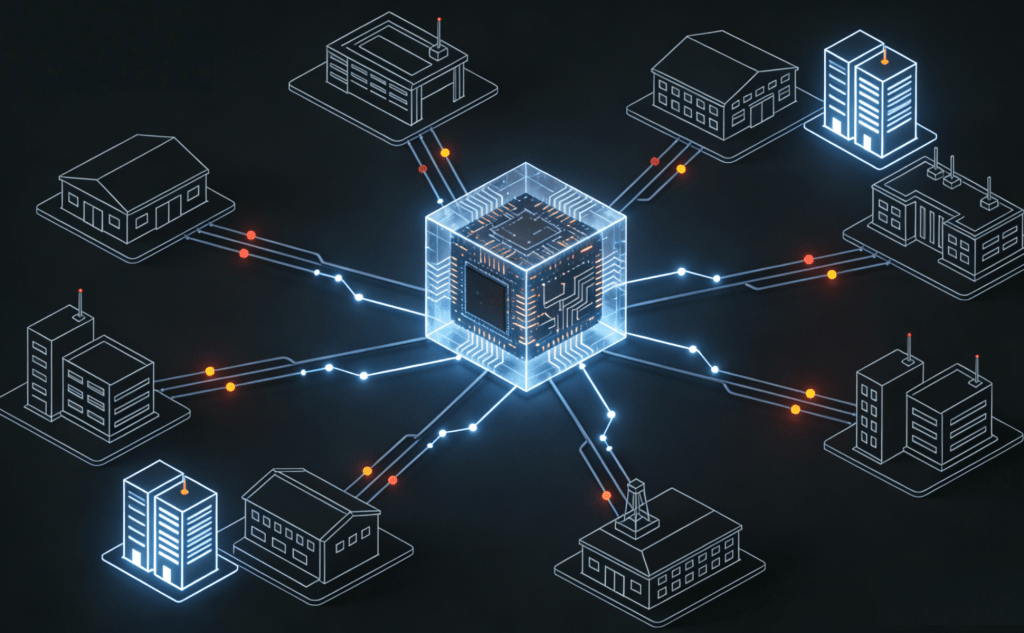
Mitigating this risk requires a strategy of architectural independence:
- Third-Party Observability: Maintaining monitoring and diagnostics that operate outside a cloud provider’s native tools to ensure an unbiased view of application health during a platform incident.
- Failover to a Different Plane: For mission-critical workloads, this necessitates designs that enable failover not just across zones, but to entirely separate cloud platforms or private infrastructure, avoiding common control-plane dependencies.
- 3. Procedural Debt in Operations
Redundancy is a structural concept; reliability is an operational outcome. Several significant 2025 outages were traced not to design flaws, but to procedural shortcomings during maintenance, upgrades, or response actions. A recurring pattern was the inadvertent removal of redundancy—such as taking parallel power paths offline simultaneously for servicing—which left systems vulnerable to a single subsequent fault.

Building operational resilience demands rigor:
- Automated Safeguards: Implementing tooling that enforces maintenance windows and prevents conflicting procedures without high-level authorization.
- Chaos Engineering for Infrastructure: Regularly conducting controlled, production-like failure drills (e.g., failing a UPS module, blocking a cooling valve) to validate procedures, team response, and system behavior.
- Continuous Validation of Redundancy: Automating the continuous verification that backup systems are not only present but functionally ready to assume load instantly.
- 4. The Vanishing Margin for Error
The push for computational efficiency has led to unprecedented power density. As rack demands soar past 70kW, the tolerance for suboptimal conditions—in cooling delivery, airflow management, or power quality—has evaporated. What was once a manageable temperature fluctuation is now an immediate thermal event triggering hardware throttling or shutdown. Precision in physical deployment and real-time environmental management has become non-negotiable.
This demands a shift from static design to dynamic engineering:
- Computational Fluid Dynamics (CFD) as a Live Tool: Employing continuous CFD modeling tied to live sensor data to anticipate hotspots and optimize airflow, rather than relying on a one-time design simulation.
- Granular Power Monitoring: Transitioning to intelligent power distribution (e.g., metered busways) that provides real-time, per-rack and per-device power consumption, enabling immediate anomaly detection and capacity planning.
- 5. Redefining the Goal: From Uptime to Recovery

The most significant philosophical shift emerging from 2025 is the redefinition of resilience itself. The traditional pursuit of “five nines” of uptime is being supplanted by metrics focused on recovery time and recovery point objectives (RTO/RPO), and the integrity of the recovery process. For stateful, distributed systems like AI training clusters or global databases, the ability to restore service cleanly and quickly is more valuable than simply having components remain powered on.
The new benchmark for resilience is characterized by:
- Designed Failure Domains: Architecting systems so that failures are contained within predictable boundaries, with clear, automated remediation pathways.
- Verified Recovery Sequences: Ensuring failover processes are not just documented but routinely tested under load, guaranteeing backup systems can assume full production traffic without data loss or corruption.
- Data Pipeline Resilience: Building checkpoints, rollback capabilities, and integrity checks into data workflows themselves, making the application layer resilient to infrastructure faults.
A Strategic Playbook for Leadership
For organizations whose operations depend on digital infrastructure, the post-2025 mandate is clear. Technical teams must execute, but business and technology leadership must strategize.

- Audit for Modern Resilience: In colocation or cloud provider selection, move beyond compliance checklists. Demand evidence of integrated failure testing, control-plane architecture details, and their operational track record with high-density workloads.
- Architect for Independence: Design critical services to withstand the failure of a single cloud provider’s control plane. This strategic direction may involve hybrid cloud architectures or multi-cloud deployments focused on critical failover paths, accepting their complexity for the sake of business continuity.
- Validate Relentlessly: Invest in a regime of continuous resilience validation. Allocate resources for chaos engineering and disaster recovery drills that test not just IT systems, but the coordination between infrastructure, platform, and application teams.
- Leverage Intelligence: Deploy AI and machine learning not just for business applications, but for infrastructure operations—predicting hardware failures, optimizing energy use, and eventually automating initial triage and response during incident management.
Conclusion: Resilience as Foundational Strategy
The outages of 2025 were a clarifying moment. They demonstrated that the increasing complexity, density, and interdependence of our digital systems have created a new risk landscape. In this environment, resilience transcends its traditional home in IT departments to become a core business strategy and a competitive differentiator.
The organizations that will thrive are those that recognize infrastructure resilience as a dynamic, ongoing engineering challenge—not a static goal achieved by certification. They will invest in the depth of design, rigor of operation, and clarity of architecture required to ensure that when failures happen, recovery is swift, predictable, and complete. In the digital economy, this capability is the ultimate foundation for trust and continuity.
About ServerRackHub:
We specialize in high-quality server racks, cabinets, and accessories for businesses of all sizes. ServerRackHub – your global wholesale partner for server racks & data center technology and solutions.
 ServerRackHub
Leave a comment