Beyond the Chill: A Strategic Reboot for a Hot Industry
For decades, the data center industry’s mantra has been simple: follow the fiber. But a powerful new signal is cutting through the noise, and it’s not a digital one—it’s a cold front. From major tech announcements to regional government white papers, a clear trend is emerging: China’s Northeast (Dongbei) is becoming the world’s most unexpected, and perhaps most logical, hotspot for next-generation data centers.
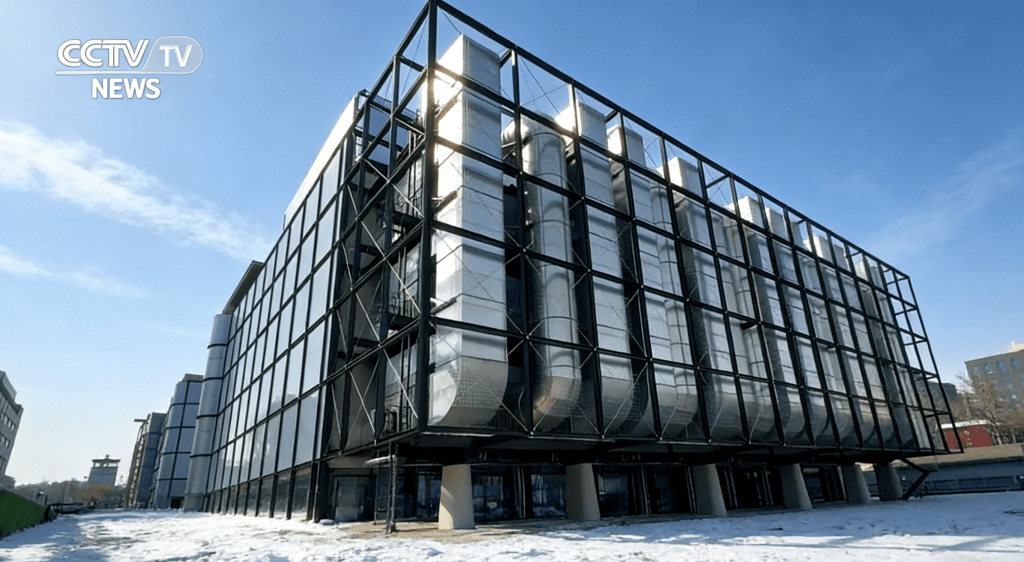
This isn’t just a story about cheap cooling. It’s a strategic, multi-billion dollar response to the industry’s most pressing historical constraints: exorbitant energy costs, unsustainable carbon footprints, and the physical limits of heat. Let’s explore why the icy plains of Heilongjiang, Jilin, and Liaoning are suddenly so attractive.
The Big Thaw on a Burning Problem
Historically, data centers have been energy gluttons, with cooling systems alone devouring up to 40% of their total power. This created a triple-bind:
- The Cost Bind: Soaring electricity bills directly eroded profitability.
- The Green Bind: Massive carbon emissions clashed with global ESG mandates.
- The Density Bind: The rise of AI servers, which can consume 3-4x more power than standard ones, made traditional air conditioning inadequate.
For years, solutions like complex liquid cooling or building in remote, mild climates were partial fixes. But the Northeast offers a paradigm shift: it turns the biggest operational problem into a free asset.
Northeast’s Cool Advantage: More Than Just Free Air-Conditioning
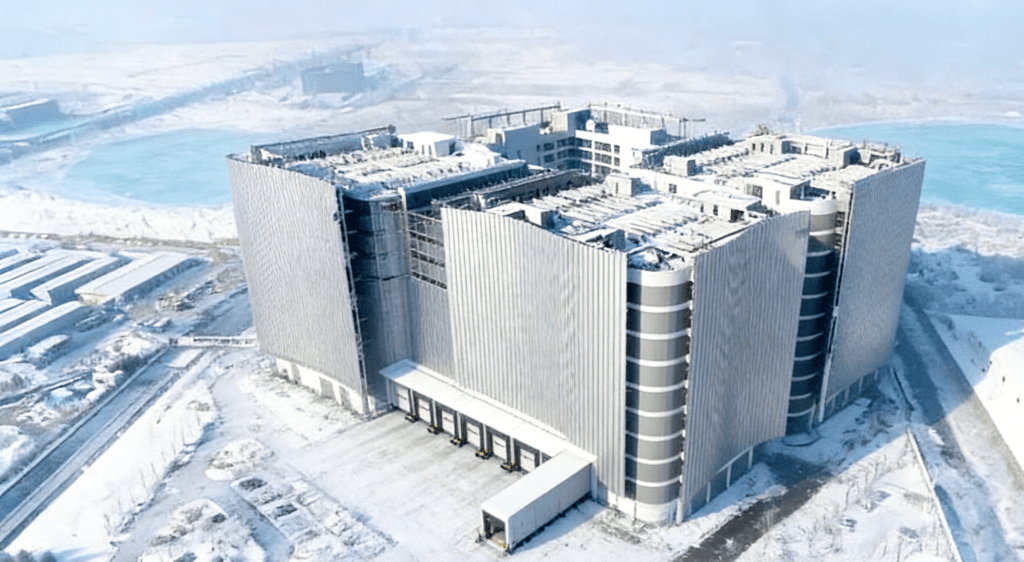
The region’s proposition is built on a powerful convergence of natural and strategic assets:
- The “Free Cooling” Jackpot: With an average annual temperature of 3-8°C and long winters, facilities can leverage outside air cooling (free cooling) for over 5,000 hours per year. This isn’t a minor efficiency gain; it’s a fundamental reworking of the energy equation. Recent projects in Harbin report PUE (Power Usage Effectiveness) values dropping as low as 1.1-1.2, compared to a global average of ~1.6. That translates to direct operational savings of 30-40% on cooling.
- The Green Grid Alignment: The Northeast is a powerhouse for wind and solar energy. Liaoning, for instance, is accelerating its “Green Power for Data Centers” initiative. This allows companies to tap into a cleaner grid, directly solving the “Green Bind” and helping meet carbon-neutral goals. It’s a perfect marriage: renewable energy powers the computers, and the cold air cools them.
- The Strategic Infrastructure Push: Recognizing this opportunity, provincial governments are rolling out aggressive incentives—streamlined approvals, subsidies for land use, and commitments to building out high-capacity, low-latency fiber optic networks. They are not just selling cold weather; they are building a complete “Digital Ice Harbor” ecosystem.
The Signals: From Blueprint to Reality
This isn’t theoretical. The news flow from the past year confirms the momentum:
- Tech Giant Moves: Major cloud providers and hyperscalers are in advanced talks or have announced plans for pilot facilities in cities like Changchun and Shenyang, specifically citing sustainability and TCO (Total Cost of Ownership) benefits.
- Colocation Expansion: Leading domestic colocation providers are breaking ground on massive, multi-phase campuses in the region, designed from the ground up for high-density AI workloads.
- Government Catalysts: The “Northeast Revitalization” strategy now has a digital core, with provinces launching dedicated “Digital Economy Development Zones” offering tailored packages for data center investors.
- Industrial AI Focus: There’s a growing emphasis on building “AI-ready” infrastructure that leverages the cold for training complex models, positioning the Northeast as a potential backend engine for China’s AI ambitions.
Insight: It’s Not a Cost Arbitrage, It’s a Climate Arbitrage
The real insight here is a shift from financial arbitrage to climate arbitrage. The industry is no longer just chasing lower electricity tariffs; it’s fundamentally re-architecting infrastructure around a stable, natural climatic resource. The cold is no longer a weather condition—it’s a critical, value-generating infrastructure component.
This move also solves a historical geopolitical concentration risk. Over-dependence on data center hubs in a few temperate coastal cities created resilience vulnerabilities. The Northeast offers geographic diversification, enhancing national data infrastructure resilience.
Frosted Challenges on the Horizon
Of course, the picture isn’t all perfectly frosted. Challenges remain:
- Latency Perception: While fiber is expanding, the region’s distance from some financial hubs requires smart network architecture for latency-sensitive applications.
- Talent Pipeline: Building and operating these advanced facilities requires a local talent pool skilled in next-gen cooling and AI infrastructure, which is still developing.
- Peak Summer Management: While winters are ideal, engineers must still design efficient hybrid systems to handle warmer summer days.
The Bottom Line: A Cool Blueprint for the Future
The rush to China’s Northeast is more than a regional trend. It’s a global proof-of-concept. It demonstrates that in the age of AI and climate urgency, the future of data centers is intrinsically linked to climate. It proves that sustainability and profitability can align when we design with nature, not just against it.
For any company planning its next decade of digital infrastructure, the question is no longer just “How much power can we get?” but increasingly, “Where on the planet can we find the most intelligent, natural synergy between our computational needs and the local environment?” The Northeast provides a compelling, and very cool, answer.
The data center of the future isn’t just powered by green energy—it’s cooled by it.
 ServerRackHub
Leave a comment